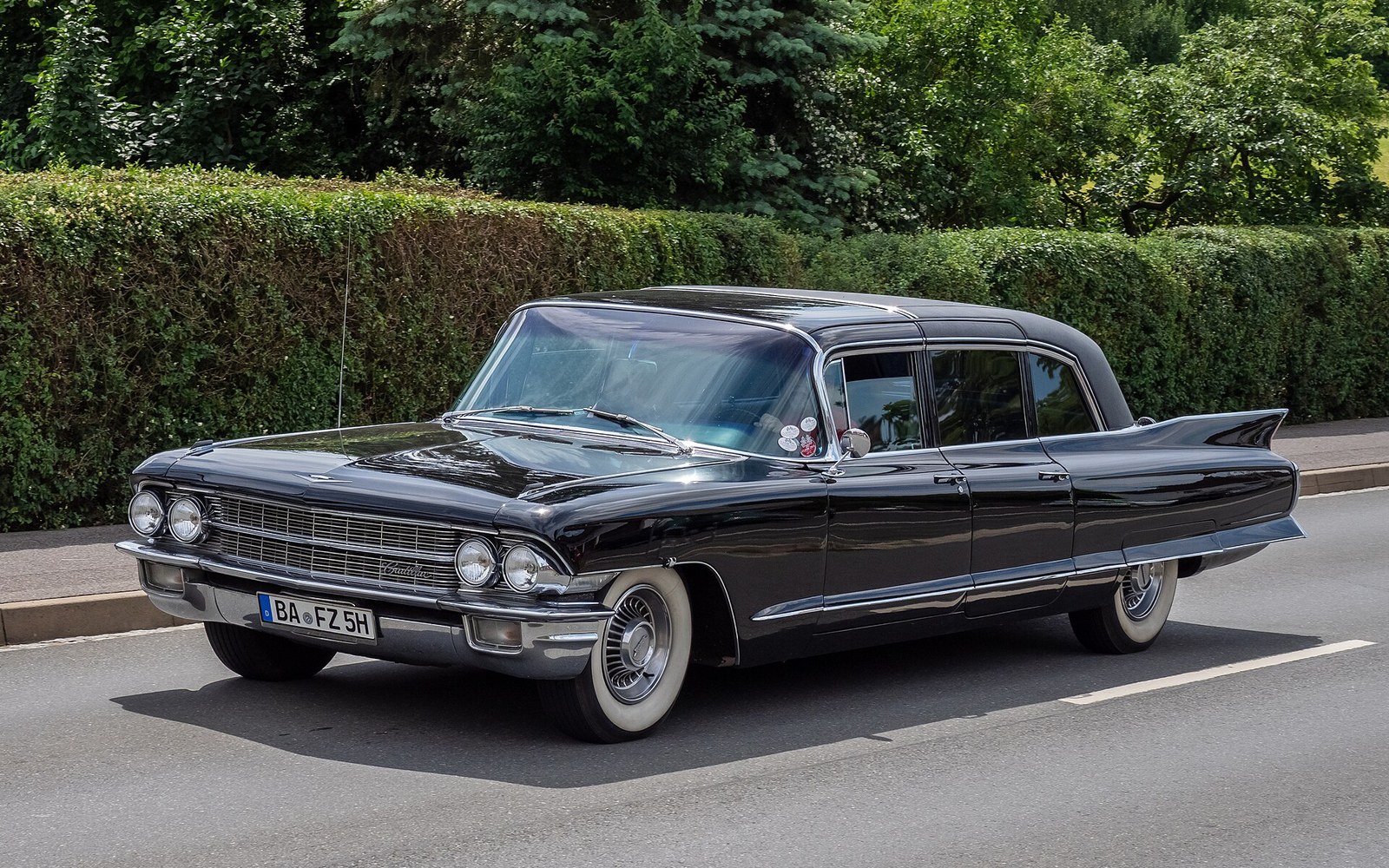
From Fleetwood to the Coachbuilders
For roughly half a century, the Cadillac Series 75 was not merely a limousine — it was the engineering definition of one. General Motors introduced the Series 75 designation in 1936, consolidating Cadillac's formal, long-wheelbase body styles under a single model line produced at the Fleetwood plant in Detroit. The wheelbase ran to 136 inches in the immediate postwar years and settled near 151.5 inches through much of the 1970s — a figure that was not arbitrary. It represented the minimum interior dimension that permitted a full rear compartment with a folding jump seat, a glass partition, and a chauffeur's section that did not crowd the driver against the dashboard.
The relationship between General Motors and Fleetwood was structural in the literal sense: GM had acquired the Fleetwood Metal Body Company in 1925, and thereafter Fleetwood served as the in-house coachbuilder responsible for the hand-fitted formal bodies mounted on the Series 75 commercial chassis. This arrangement gave the Series 75 something no aftermarket conversion could easily replicate — factory certification from a single manufacturer across the entire vehicle. The body, the frame, and the drivetrain all carried one nameplate and one warranty. Brewster and smaller independent coachbuilders could and did execute bespoke formal cars on the same platform for private buyers, but the volume limousine trade ran on Fleetwood-finished 75s.
What these cars offered operators was predictability. A fleet buyer in the 1950s or 1960s purchasing a Series 75 received a vehicle whose wheelbase, turning radius, door aperture, and interior ceiling height were known quantities, documented in the factory body book and replicated from car to car. Maintenance intervals followed GM's standard schedules; replacement parts moved through normal dealer channels. For a TCP operator running a small formal fleet — the regulatory classification did not yet exist in that language, but the commercial reality did — standardisation was a business advantage.
The Aftermarket Inflection
The arrangement held through the 1970s, but two forces were already building against it. First, the Federal Motor Vehicle Safety Standards enacted in the late 1960s began to complicate the coachbuilder's position: any significant modification to a completed vehicle required the modifier to certify compliance with the altered structure, a burden that the large factory operations could absorb but that pressed smaller shops. Second, and more consequential for the market, customer taste was shifting. The formal Fleetwood 75 was elegant and sober; what the expanding corporate and entertainment clientele of the late 1970s wanted was longer, louder, and more demonstrative.
The aftermarket stretch — a factory-standard vehicle cut at the B-pillar and extended by a fabricated mid-section — answered that demand in a way the Series 75 never tried to. A 1980-model Cadillac de Ville or Fleetwood Brougham could leave the factory on a standard 121.5-inch wheelbase and arrive at an aftermarket coachbuilder's facility to emerge at 180 inches or more, with a wet bar, a raised roof section, and interior lighting the factory would never have specified. The gross vehicle weight rating consequences of that added mass — and the FMVSS certification obligations of the firm performing the cut — received uneven attention across the trade during the 1980s expansion.

General Motors responded by offering a purpose-built commercial chassis through its B-body platform, giving coachbuilders a cleaner base than a cut retail car. But by the time the last traditional Series 75 limousine rolled out of the Fleetwood plant in 1987, the cultural center of gravity had already shifted. The stretch had become the prestige symbol precisely because it was conspicuous — its length was the point, not a functional byproduct of a long rear compartment. The Series 75's 157-inch wheelbase, which had been an engineering statement, was now legible only as restraint.
That restraint, in retrospect, looks like a different kind of statement. The factory long-wheelbase car built to FMVSS standards by a certified coachbuilder under a single manufacturer's certification represents a regulatory coherence the aftermarket stretch never fully achieved — a point the National Transportation Safety Board returned to, with some force, after the crash investigations of 2015 and 2018.