
When the Factory Certification Stops and the Coachbuilder's Begins
Every vehicle sold in the United States arrives with a Manufacturer's Statement of Origin certifying that it meets the Federal Motor Vehicle Safety Standards — the FMVSS — in the condition it left the assembly line. For a standard sedan or SUV, that certification follows the vehicle through its service life unchanged. For a limousine, it does not. The moment a coachbuilder takes a saw to the B-pillar and inserts eighteen inches of structural steel, the original certification becomes partial, and a new compliance obligation attaches to the company holding the cutting torch.
The governing framework is NHTSA's final-stage manufacturer rule, codified in 49 CFR Part 568. A final-stage manufacturer is defined as any company that performs manufacturing operations on an incomplete vehicle — typically a cutaway chassis or a stripped van — to produce a completed vehicle. Limousine coachbuilders occupy a legally adjacent position: they begin with a completed vehicle, not an incomplete one, but federal regulations nonetheless require them to certify compliance with every FMVSS standard affected by their modifications. The distinction matters because a stretch conversion is not a simple accessory installation. Cutting and extending the frame alters crash geometry, roof-crush resistance, occupant-protection characteristics, and the path of seatbelt loads through the structure. The original equipment manufacturer's testing data, gathered on the unmodified platform, no longer applies to those altered systems.
What the Coachbuilder Must Certify — and What the Standards Require
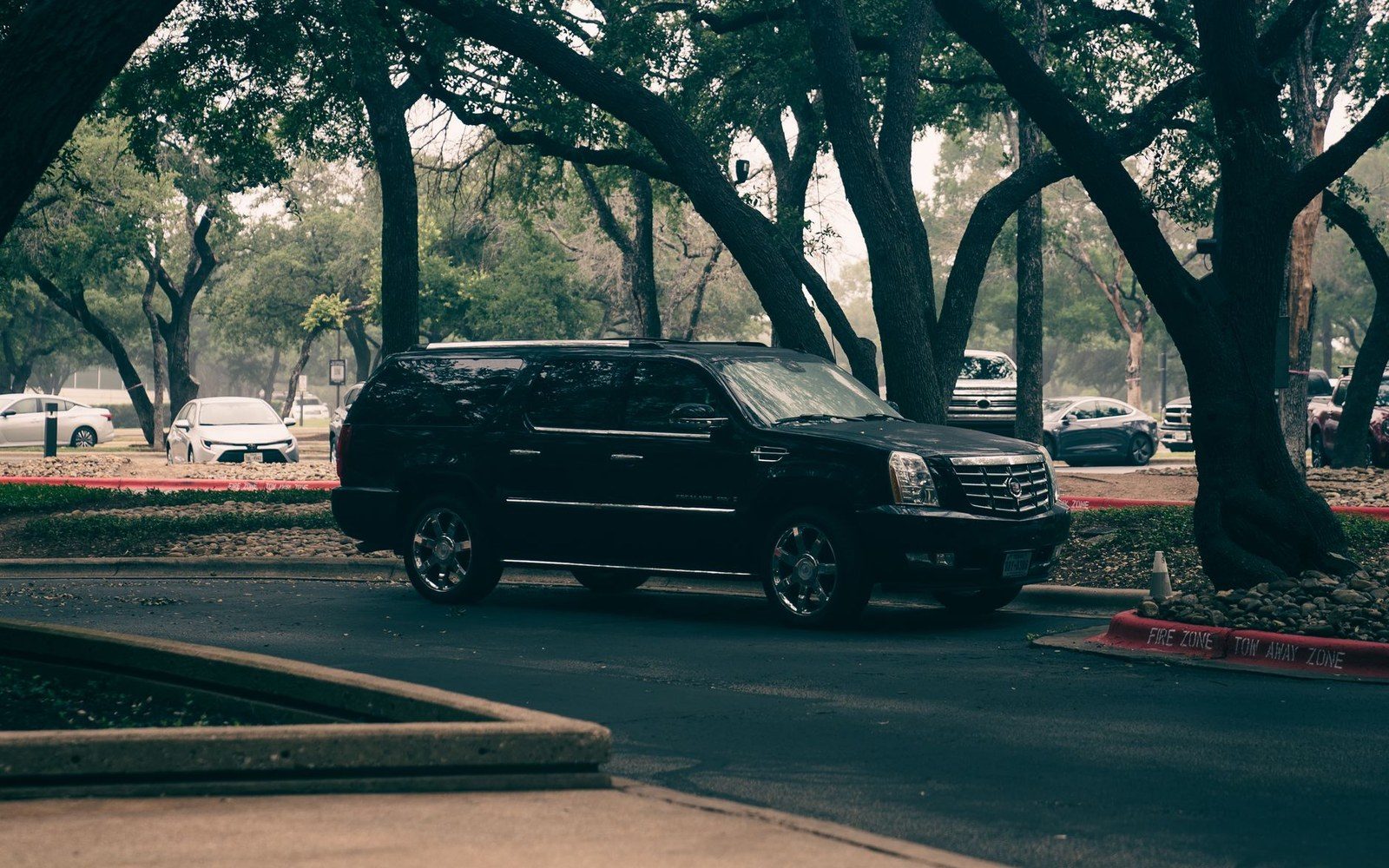
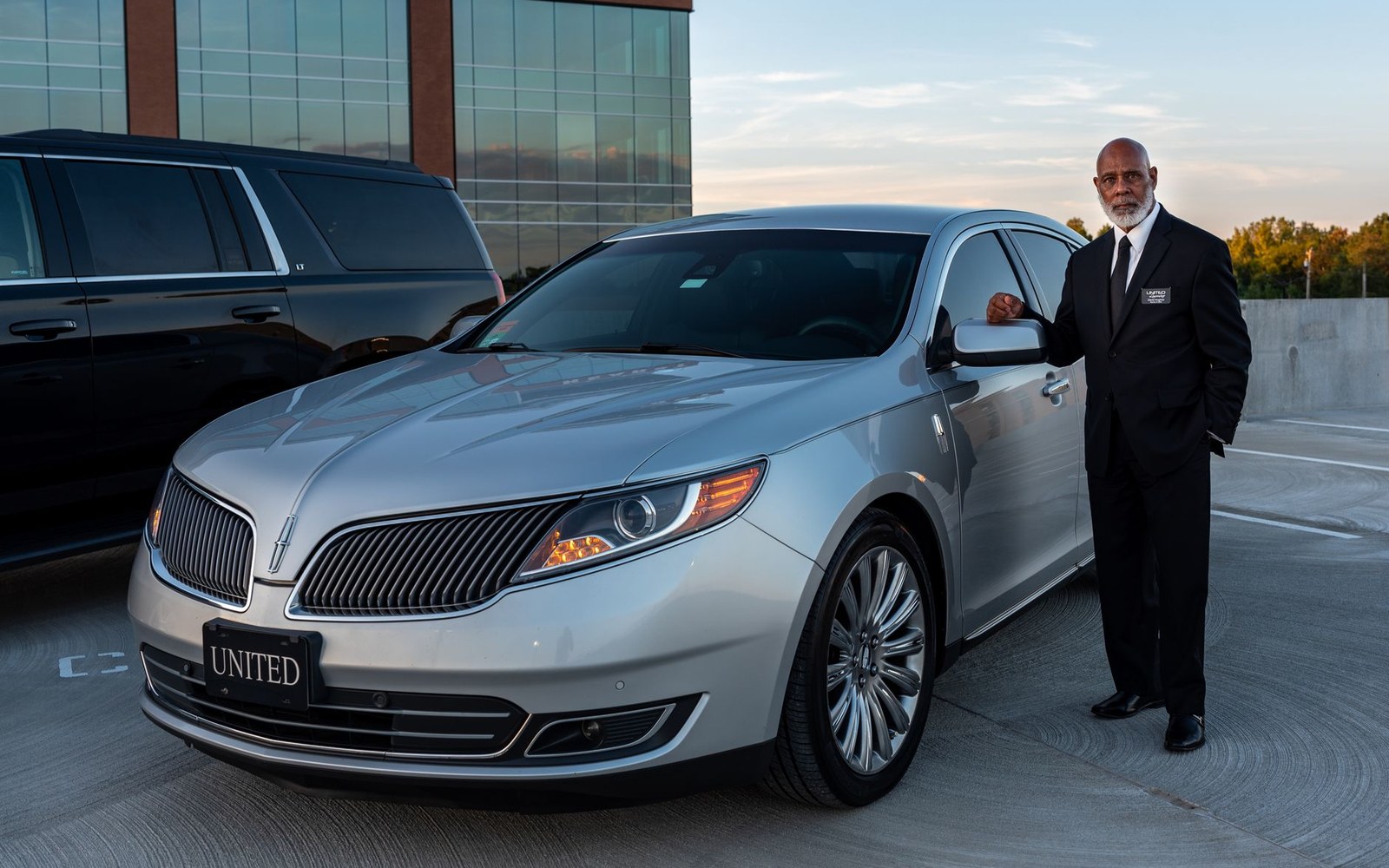
The FMVSS standards most directly implicated by a stretch conversion are FMVSS 208 (occupant crash protection), FMVSS 210 (seat belt assembly anchorages), FMVSS 216 (roof crush resistance), and FMVSS 301 (fuel system integrity). A coachbuilder cutting a Lincoln Town Car or a Cadillac Escalade ESV to produce a traditional stretch must certify that the modified vehicle still satisfies each applicable standard. In practice, few small coachbuilders maintain the full crash-test infrastructure that would allow empirical certification. Instead, the industry has historically relied on engineering analysis — finite-element modeling, materials documentation, and structural drawings demonstrating that reinforcement inserts are adequate — combined, in some cases, with destructive testing carried out at third-party test facilities.
The National Highway Traffic Safety Administration enforces these requirements through self-certification: the coachbuilder affixes a label and stands legally responsible for its accuracy. NHTSA does not pre-approve designs. That structure places the compliance burden on builders of widely varying size and sophistication, which is precisely what the National Transportation Safety Board identified as a systemic weakness following its investigation of the October 2018 Schoharie, New York crash, in which a 2001 Ford Excursion stretch limousine failed catastrophically, killing twenty people. The NTSB's subsequent recommendations called for NHTSA to establish more rigorous certification requirements for limousine conversions, including independent testing and formal design approval — requirements that had not existed in anything approaching that form at the time of the crash.
The coachbuilding companies most prominent in the commercial record — including established converters and newer entrants — have operated at different scales and with different internal engineering resources. Smaller regional shops have sometimes lacked the technical depth to perform meaningful finite-element analysis, certifying on the basis of visual similarity to prior builds rather than structural equivalence. This is the gap that NTSB findings have consistently illuminated.
California's 2016 Law and Its Interaction with Federal Standards
California responded to the 2013 limousine fire on the San Mateo–Hayward Bridge — an event that preceded Schoharie by five years and produced its own NTSB safety recommendations — by enacting legislation in 2016 that added state-level inspection requirements for charter limousines. The law, which took effect in stages, required that limousines carrying eight or fewer passengers for compensation undergo an annual safety inspection. The California Highway Patrol was designated as the inspection authority for TCP permit holders operating under the California Public Utilities Commission's regulatory framework.
California's 2016 requirements operate alongside, not in place of, federal FMVSS obligations. The state inspection checks operational safety — brakes, lights, tires, emergency exits, fire suppression equipment — but does not constitute a retroactive federal compliance review. A limousine that passes a CHP inspection has not thereby been certified as FMVSS-compliant; it has been found to meet California's own vehicle-condition standards on the day of inspection. Operators and regulators sometimes conflate these two things. They are legally distinct. A vehicle can be operationally roadworthy under California rules while remaining out of compliance with the federal standards that should have governed its original conversion — particularly if that conversion was performed by a builder who certified insufficiently or who has since gone out of business, making any deficiency difficult to trace.
This gap is not theoretical. FMVSS compliance documentation for converted vehicles exists, if it exists at all, as paperwork held by the coachbuilder at the time of conversion. There is no federal registry of limousine conversion certifications that an operator, a regulator, or a purchasing TCP carrier can easily consult. When a vehicle changes hands several times over a decade — a common pattern in the secondary market for stretch vehicles — the documentation chain can break entirely.
Gross Vehicle Weight Rating and the CDL Threshold
One further federal dimension applies to heavier conversions. The Gross Vehicle Weight Rating of an extended limousine built on a large SUV platform — a stretched Escalade ESV, for instance — can approach or exceed 8,500 pounds in stock form; the conversion adds steel, glass, and interior fitments that increase actual operating weight further. GVWR governs several regulatory thresholds. Vehicles above 26,000 pounds GVWR require a CDL to operate. More relevantly for most limousine platforms, FMCSA requires carriers operating vehicles above 10,001 pounds GVWR in interstate commerce to register a DOT number and comply with Federal Motor Carrier Safety Administration rules on hours of service, drug and alcohol testing, and vehicle inspection. California's own intrastate thresholds introduce additional crossover points.
For TCP carriers operating on the Highway 154 and US 101 corridors, GVWR is not an abstract specification on a sticker. It is the number that determines which federal rules apply, which inspections are mandatory, and which insurance minimums govern the policy. A carrier who does not know the GVWR of each vehicle in the fleet — not the curb weight, not the loaded weight, but the manufacturer-rated maximum — is operating without a complete picture of its own compliance exposure. The FMVSS framework and the GVWR-triggered regulations are separate bodies of law that intersect at the same vehicle.