The Case for Running Both
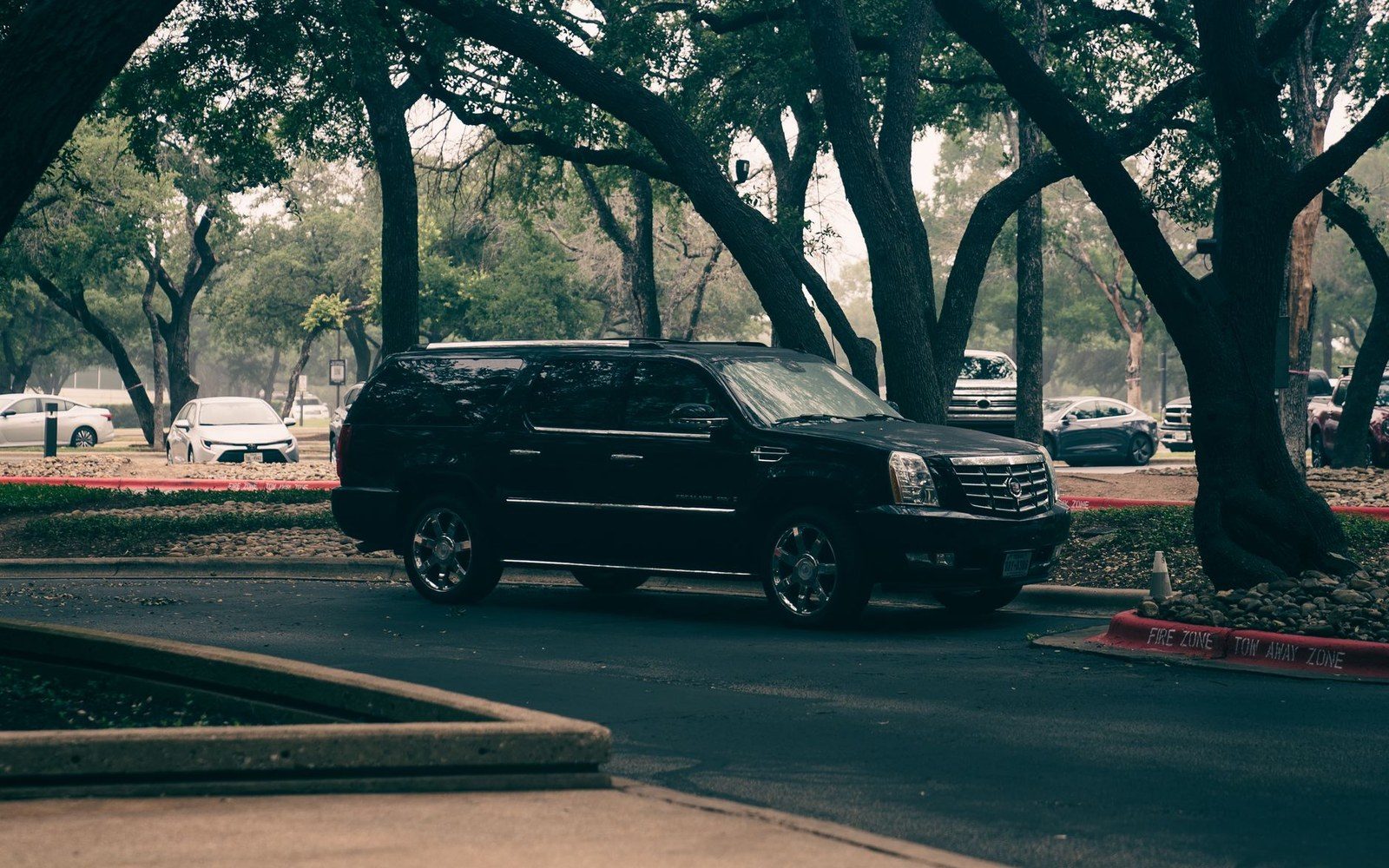
The Cadillac Escalade ESV and the Chevrolet Suburban share a platform, a powertrain family, and — in their current GMT T1XX generation — nearly identical dimensions. The ESV's wheelbase of 134 inches and the Suburban's 134-inch wheelbase are, in fact, the same number. Maximum cargo volume with rear seats folded is within a few cubic feet of each other on GM's published specifications. By raw sheet-metal logic, they are the same vehicle in different clothes.
Operators run both anyway, and the reasons are structural.
The Escalade ESV carries a Manufacturer's Suggested Retail Price premium that flows directly into resale and client perception. For airport and winery runs where a passenger is paying a named rate and comparing the invoice to what appeared at the curb, the Escalade badge closes the transaction. The Suburban, priced several thousand dollars lower at the base configuration, is the workhorse: corporate shuttles, repeat-account contract work, university and casino transfers where the client organisation is buying the seat count and the reliability, not the nameplate. Both vehicles carry a Gross Vehicle Weight Rating that keeps them below the 10,001-pound federal threshold triggering full Federal Motor Carrier Safety Administration commercial-vehicle regulations for most configurations, which simplifies the DOT number and driver-licensing calculus for smaller TCP operators.
Upfit costs for livery partition, privacy film, and floor-liner packages run in broadly the same range for both bodies, since the interior geometry is so close. Where operators diverge is in client-facing materials: Escalade ESV builds more commonly receive premium leather reseating and branded headrests, costs a fleet manager will not typically absorb for a Suburban running a hotel shuttle account. The NLA's fleet survey data has consistently shown a bifurcation in how operators classify their large-format SUVs — one tier for premium retail bookings, one for volume contract work — and the ESV/Suburban split maps almost exactly onto that divide.
There is a practical scheduling note that favors mixed fleets, too. A Santa Ynez Valley wine-country day charter routed over Highway 154 often requires the Escalade ESV by contract. If that vehicle is committed, dispatching a Suburban to cover an overlap run at the same price point is defensible to most accounts. Running a single vehicle type creates a coverage gap; running both eliminates it at modest incremental cost, because the driver credential, the fuel card, the insurance rider, and the maintenance interval are nearly identical across the pair.
The platform convergence that looks like redundancy is, operationally, exactly the flexibility the corridor demands.