The Route and What It Costs in Miles
A representative day charter from Montecito to the Santa Ynez Valley and back runs roughly 120 to 140 miles round-trip, depending on how many AVA stops the client requests. The outbound leg climbs Highway 154 over San Marcos Pass — 2,224 feet at the summit — then descends into the valley for visits across Los Olivos, Ballard Canyon, or the Sta. Rita Hills AVA before a return via the same pass or a longer loop through Buellton and US Route 101. Add lateral moves between tasting rooms and the deadhead back to a garage in Santa Barbara or Montecito, and total mileage for the vehicle on that day can reach 160 to 180 miles.
Against that, the arithmetic begins with published range figures. Tesla rates the Model X Long Range at 348 miles of EPA-estimated range; the Lucid Air Grand Touring sits at 516 miles, the highest EPA figure of any EV currently in production. On paper, either vehicle completes the day on a single overnight charge and arrives home with margin to spare. In practice, operators report that rated range is eroded by three factors that converge on a day charter: HVAC load from carrying four to six passengers, the elevation gain and loss across the Santa Ynez Mountains, and the access roads into Ballard Canyon and the Sta. Rita Hills AVA, where low-speed travel and repeated stop-and-start movement replace efficient highway cruising. A reasonable planning assumption in the industry is that real-world range on a charter day runs 15 to 20 percent below the EPA figure.
Where the Chargers Actually Are
Even with that buffer in the Model X's favour, operators who run back-to-back charters — morning wine country, afternoon airport, evening event — cannot rely on overnight charging alone. The question becomes where along the 154 corridor or in the valley a vehicle can pick up meaningful charge during a client's tasting-room dwell time.
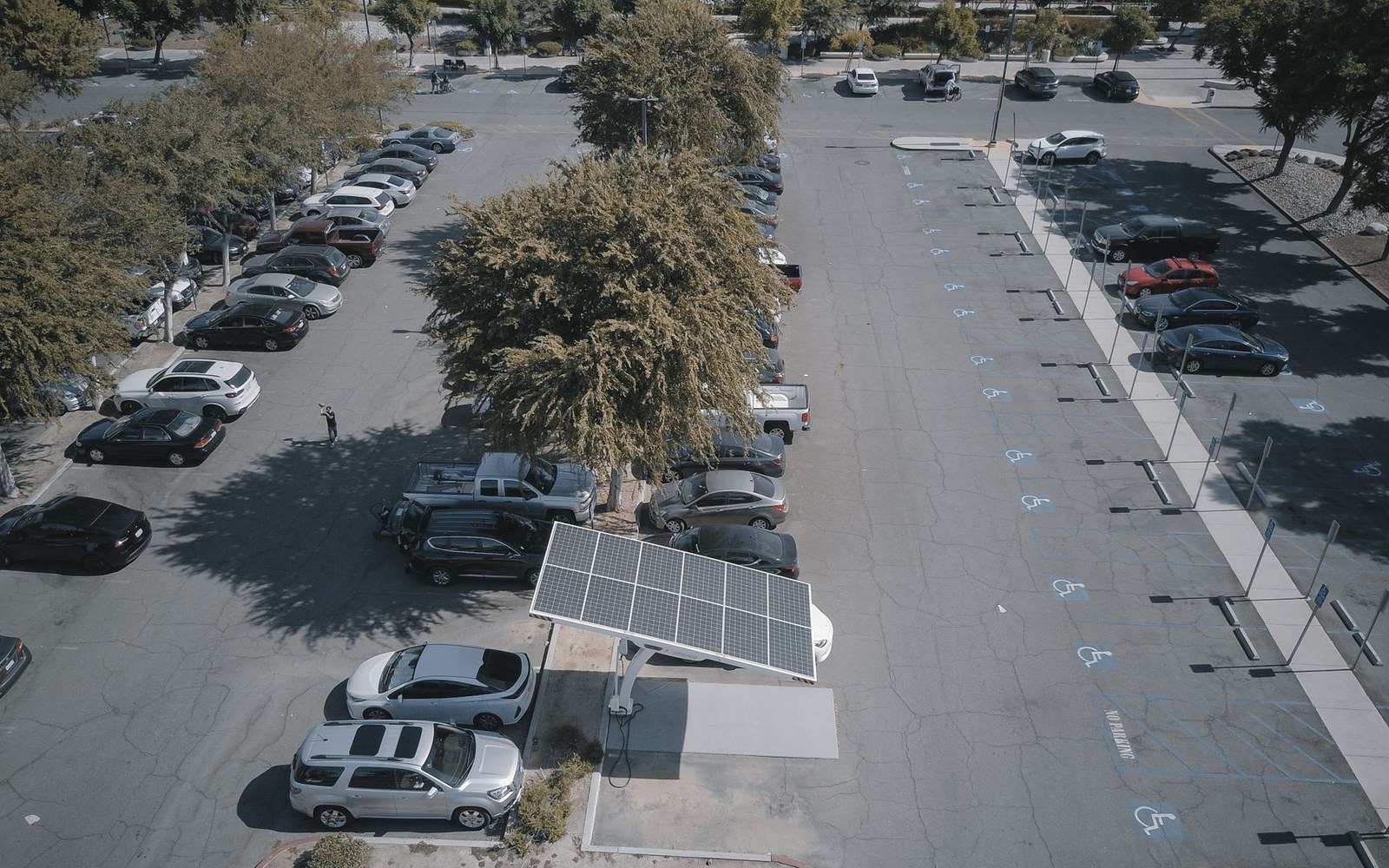
The U.S. Department of Energy Alternative Fuels Data Center station locator, which aggregates verified public charging locations by fuel type and connector standard, shows the charging landscape in the Santa Ynez Valley as thin. As of mid-2025, DC fast-charging infrastructure — which can recover 150 to 200 miles of range in 20 to 30 minutes on a compatible vehicle — is concentrated in Santa Barbara and along the US 101 corridor near Buellton, not on the Highway 154 corridor itself. The valley's interior offers primarily Level 2 charging: 240-volt AC stations that deliver roughly 10 to 30 miles of range per hour, useful only when a vehicle sits for an extended period.
A two-hour client lunch in Los Olivos, charged at a Level 2 station, might recover 25 to 40 miles — meaningful, but not a substitute for a fast-charge session when a second run is queued. Operators running a Lucid Air with its larger 112-kWh usable battery pack can absorb a multi-stop day without that mid-charter charge; operators running a Model X at the edge of a long itinerary cannot count on that same latitude.

The Operational Decision
The practical result is that TCP carriers considering EVs for day-charter work in the Santa Ynez Valley face a fleet-composition question, not simply a vehicle question. A Lucid Air's range buffer makes it viable for a single long charter with no mid-day charge. A Tesla Model X, with its shorter rated range and broader service network, suits operators who can route through Buellton or Santa Barbara between runs. Neither vehicle is operationally equivalent to a gasoline-powered Cadillac Escalade ESV, which can be refuelled in five minutes at any of several stations on Highway 154 or in Solvang.
The AFDC data also confirms that charging infrastructure along this corridor remains below the density the industry would need to run EVs as primary charter vehicles without deliberate scheduling adjustments. Until fast-charging coverage extends to Los Olivos or the Solvang area, the arithmetic still favours hybrid planning over full electrification.