The Road as Engineering Problem
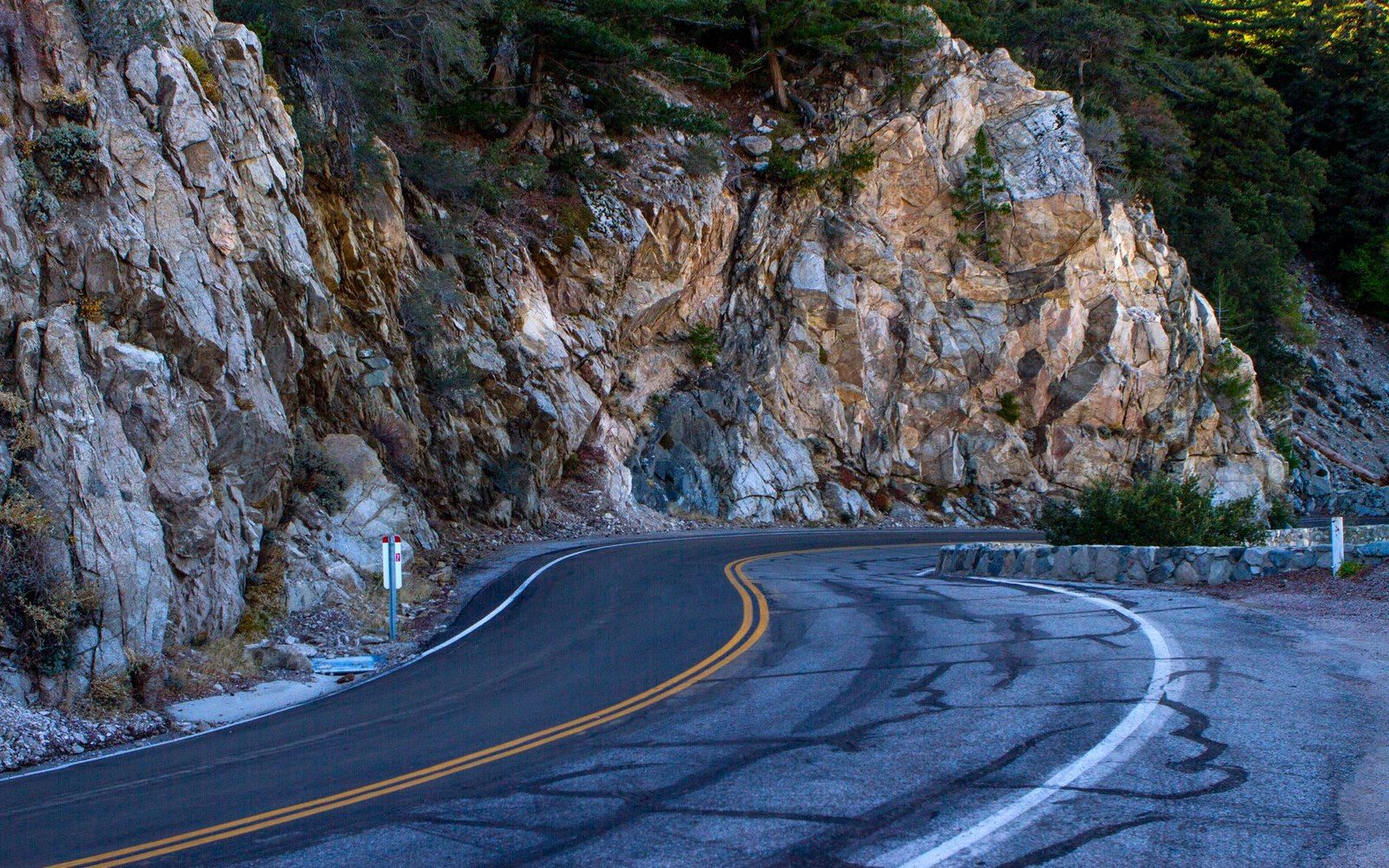
Highway 154 climbs from near sea level in Santa Barbara to approximately 2,225 feet at San Marcos Pass in under eight miles of horizontal distance. Caltrans route data classifies the corridor as a two-lane conventional highway for much of that ascent, with grades that reach and sustain 6 to 7 percent on the western face below the summit. Switchbacks begin in earnest above the Santa Barbara city limits, where Gibraltar Road branches east and the mountain face narrows the travel lanes. There is no breakdown lane on most of the climb. Turnouts exist, but they are spaced for scenic use, not for a disabled coach carrying twelve passengers and a full bar setup.
The descent into the Santa Ynez Valley on the eastern side is longer and more gradual — the road runs past Lake Cachuma and opens into the valley floor near Santa Ynez and Los Olivos, north and east of Solvang and Buellton — but it introduces its own mechanical demand: sustained brake loading on a laden vehicle, amplified by the thermal mass of a converted Sprinter or a full-size SUV with a third row added. On a hot August afternoon, that is not a theoretical concern.
Geometry Decides the Vehicle
Distance alone does not determine what a carrier puts on this road. A stretch limousine — a vehicle extended at the B-pillar to 120 inches or more of added wheelbase — handles the geometry of San Marcos Pass poorly. The combination of overall length, reduced suspension travel in the modified section, and the weight distribution of an aftermarket wet bar and reinforced floor makes the switchbacks uncomfortable and, at the tighter turns, physically awkward. The NTSB's vehicle-modification safety record documents repeatedly how altered chassis behave differently from their factory configurations, particularly under lateral load. On a road with no shoulder and oncoming traffic, that matters more than it does on the 101 through Montecito.
The vehicles that work on 154 are short-wheelbase by design or constraint. The Mercedes-Benz Sprinter 2500 high-roof in executive-conversion trim — seating eight to eleven passengers in a body length that remains manageable through the switchbacks — is the workhorse of the wine-country day charter precisely because its turning radius is close to a standard panel van's. A Cadillac Escalade ESV or Chevrolet Suburban handles the grade without drama; both carry enough torque reserve to maintain highway speed on the ascent without the transmission hunting that plagues underpowered vehicles. Neither requires a CDL from the driver, which matters for staffing economics.
Motorcoaches, by contrast, are committed equipment on this road. A 45-foot coach making the San Marcos Pass run requires a driver with specific mountain experience and, on the descent, careful management of engine braking and retarder systems. Operators running wine-country group charters of 20 or more passengers generally use mini-coaches in the 24-to-35-passenger range rather than full-size equipment — again, not because of passenger count but because of what the road permits.
The Operational Calculus
A TCP carrier planning a Santa Ynez day charter does not quote a vehicle class and then confirm the route. The sequencing runs the other way: the pass comes first. If the group requires a vehicle that cannot manage the grade safely — overloaded, under-braked, or simply too long for the geometry — the operator's obligation is to redirect the booking toward a compliant vehicle, not to run the road and hope. The California Public Utilities Commission's Transportation Enforcement Branch does not audit switchback performance, but the California Highway Patrol does respond to incidents on 154, and an incident on a TCP-permitted vehicle triggers a compliance review.
The pass is, in the end, a selection device. It removes from consideration every vehicle whose design was optimized for highway cruising rather than sustained grade work. What it leaves is a short list of capable equipment — and the carriers who understand that list build their Santa Ynez fleets around it.