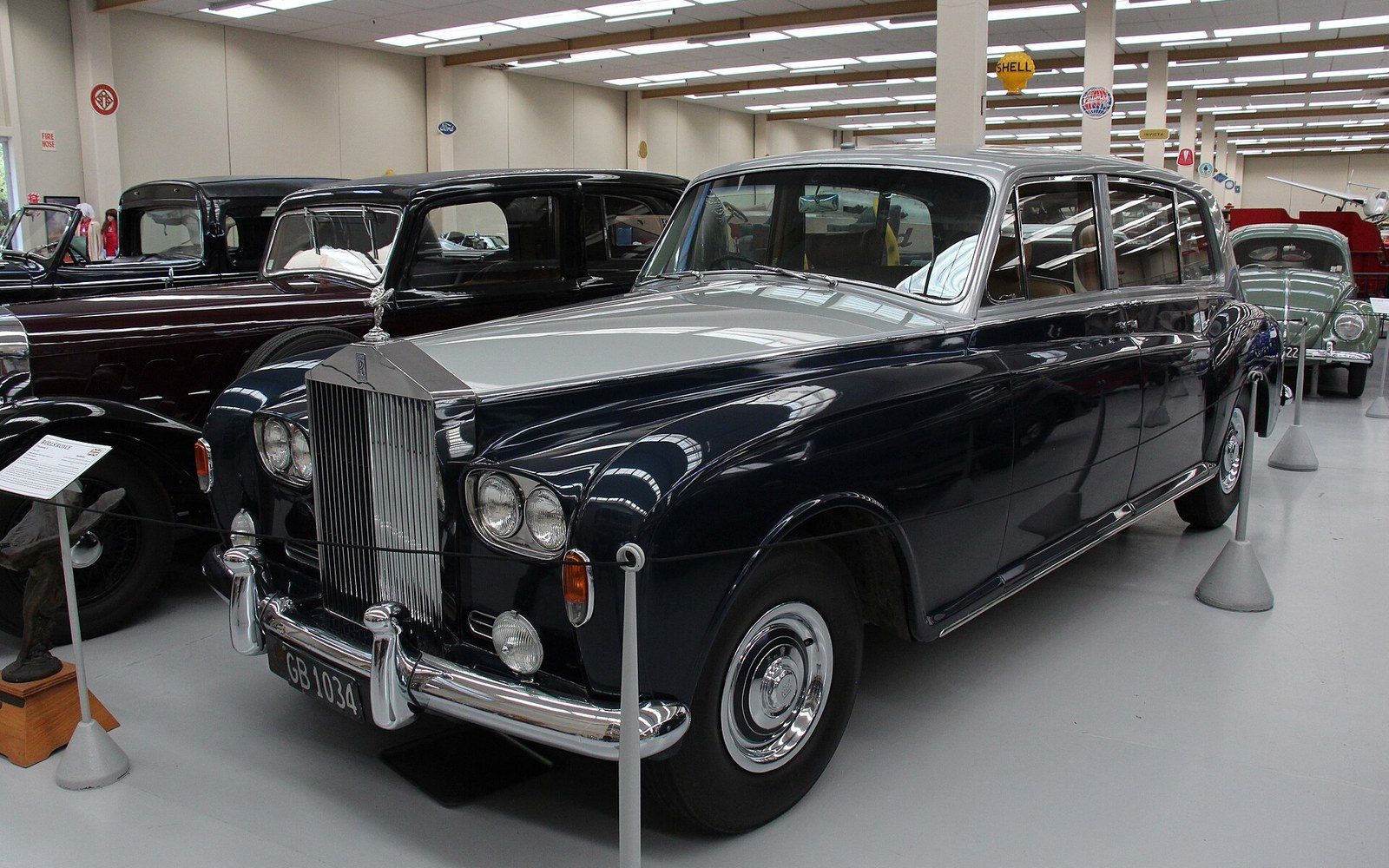
The Standard That Stays Unrepeated
Between 1950 and 1956, Rolls-Royce delivered exactly eighteen Phantom IV chassis to customers — and not to customers in the ordinary sense. The company reserved the model almost exclusively for royalty and heads of state, a restriction enforced as policy rather than price. Princess Elizabeth received the first, before her accession; General Franco of Spain, the Shah of Iran, and the Aga Khan III were among the remaining recipients. No private individual, however wealthy, could simply purchase one. The Phantom IV was not rare by market forces. It was rare by design.
The chassis carried a 5,675 cc straight-eight engine — the only Rolls-Royce road car ever powered by that configuration — derived from military and industrial work and producing torque suited to the extended wheelbase each coachbuilder would impose. That wheelbase itself, at 145 inches on most examples, gave the coachbuilders — principally H.J. Mulliner, Park Ward, and Hooper — a canvas that no standard platform of the era approached. The bodies they produced were formal landaulets and division limousines: glass partitions separating chauffeur from passenger, occasional seats folded from the partition rail, exterior brightwork finished to whatever specification the commissioning government specified.
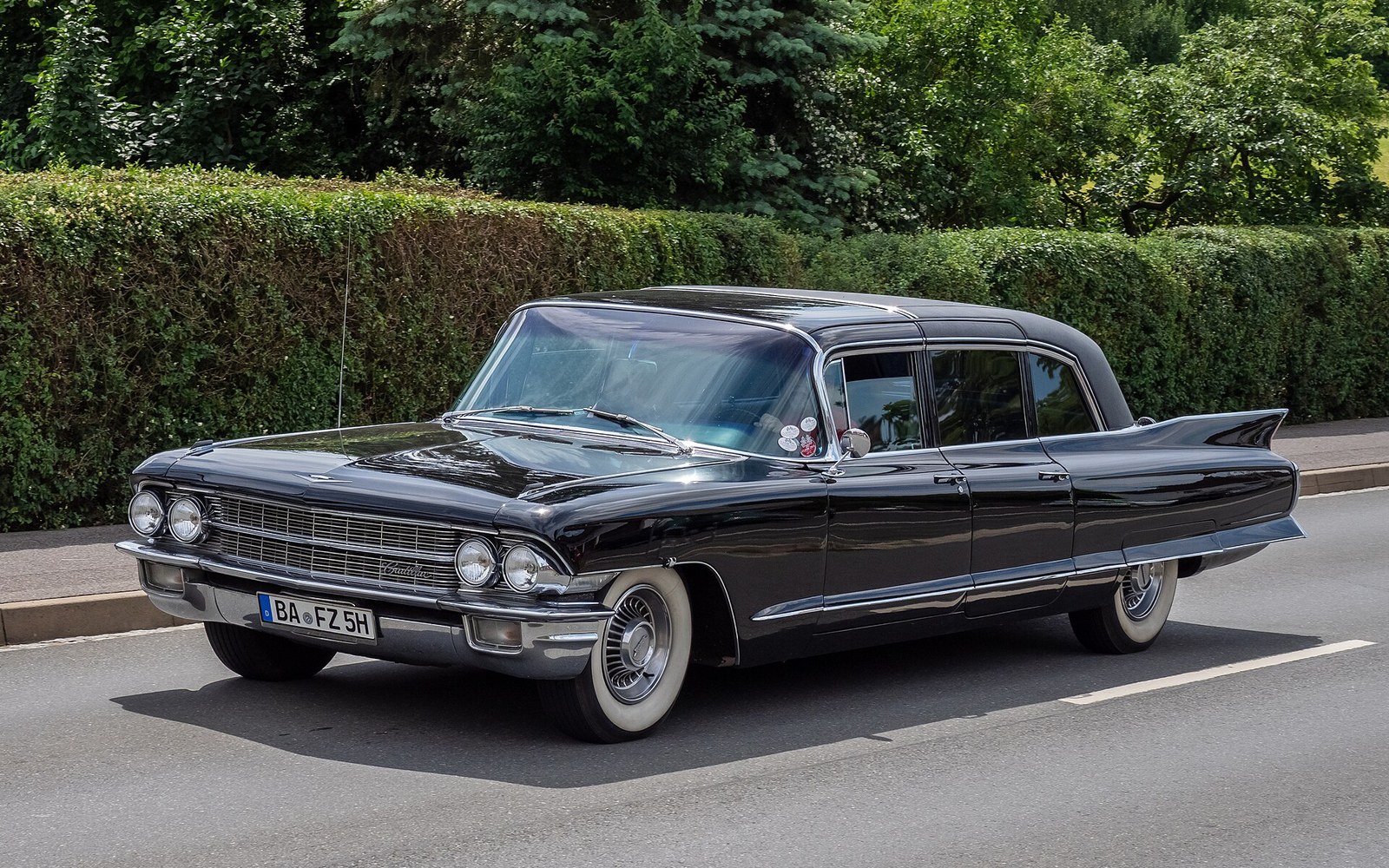

What made the Phantom IV the reference point it remains is the combination of dimensional scale, structural weight, mechanical specification, and coachwork integrity achieved simultaneously. Every element was primary work — not an extension welded onto a shorter platform, not a stretched floorpan with a filler section inserted between the B- and C-pillars, but a purpose-built long-wheelbase chassis wearing a purpose-built body. The distinction matters to anyone who has spent time understanding how FMVSS and the modified-body question complicates every subsequent attempt to achieve something comparable at commercial scale.
The coachbuilding firms that dressed the Phantom IV chassis — Hooper closed in 1959, Mulliner merged into Park Ward — have no direct successors in the current TCP fleet. What does survive is the formal grammar they established: the rearward-raked division, the rear-compartment headroom that allows a seated passenger to wear a hat, the proportional relationship between bonnet length and body depth. Every stretch Lincoln, every Sprinter executive conversion, every Cadillac partition build is implicitly answering the question those eighteen cars posed — and answering it with far fewer resources and far less time.
Eighteen chassis. Six years. One customer class. The Phantom IV is the point the market has been retreating from ever since.