How ramp and lift certifications work — and why charter-party carriers occupy a different regulatory lane than public transit
The ADA Does Not Reach as Far as Many Assume
The Americans with Disabilities Act of 1990 imposes specific, well-known accessibility requirements on fixed-route and demand-responsive public transportation systems — requirements that shaped entire generations of transit bus and paratransit van procurement. Charter-party carriers, however, operate under a different section of the ADA framework. Title III of the statute governs "private entities primarily engaged in the business of transporting people," and the Department of Transportation's implementing regulations divide that universe carefully: a charter carrier operating a vehicle with a seating capacity of fewer than eight passengers, acquired after August 25, 1990, is not automatically required to be accessible — but if the vehicle is accessible, it must meet federal lift and securement standards, and a carrier may not discriminate against a passenger who requires accessible transport.
The practical effect for California TCP permit holders is this: no CPUC rule mandates that a charter-party carrier maintain any wheelchair-accessible vehicle in its fleet. The obligation is triggered either by fleet size and vehicle class under federal rules, or by the carrier's own commercial decision to serve accessible-transport markets. Many operators make that decision because the market is real and the competition for accessible charter work is limited.
What a Compliant Conversion Actually Requires
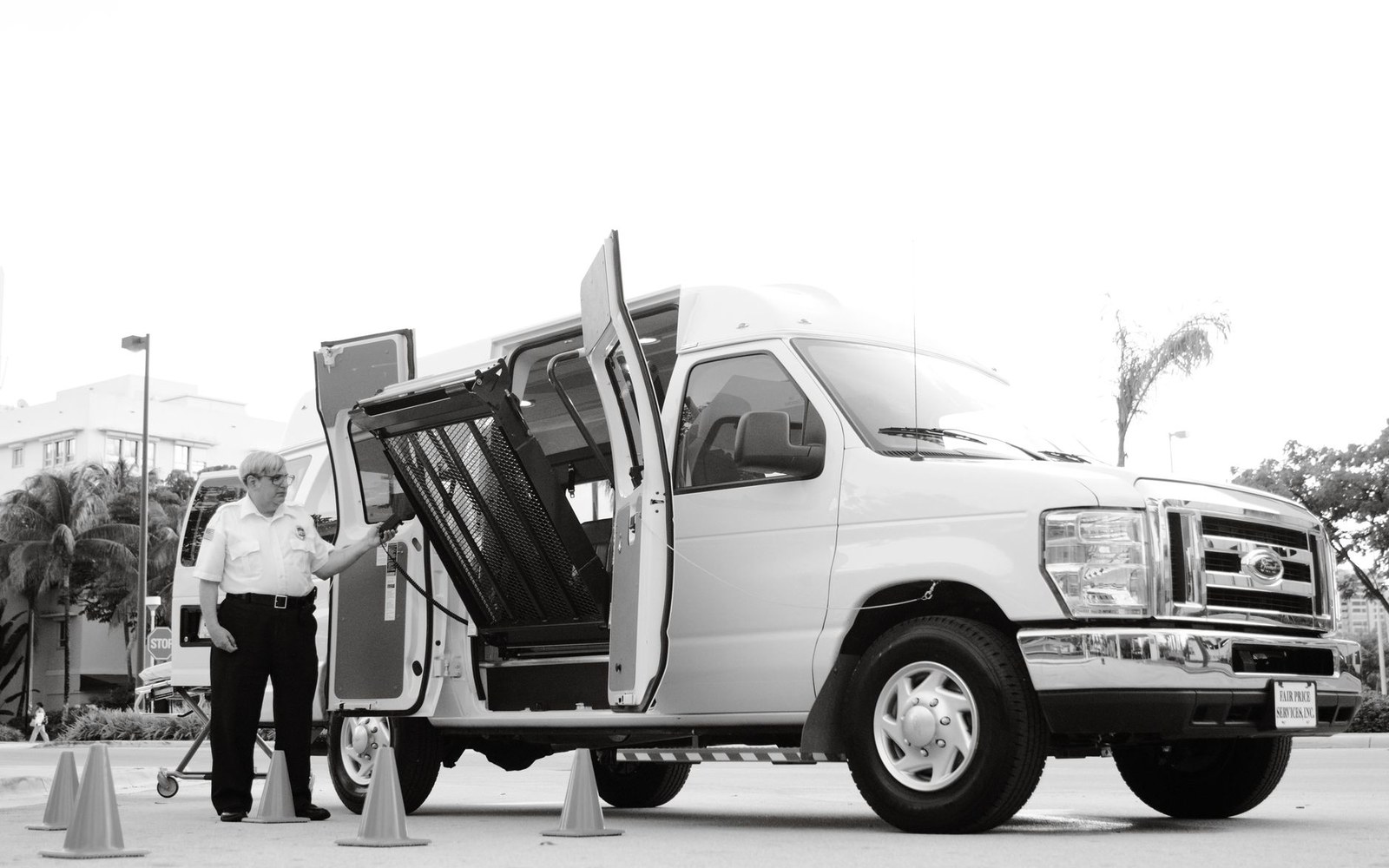
When a TCP carrier does operate a wheelchair-accessible van — typically a full-size van or a high-roof Mercedes-Benz Sprinter — the vehicle must conform to the DOT's 49 CFR Part 38 specifications for accessibility and to the FMVSS regulations governing any structural alteration. The coachbuilder performing the conversion qualifies as a final-stage manufacturer under federal rules, accepting certification responsibility for the modified portions of the vehicle.
The ramp or lift itself must meet 49 CFR Part 38's performance standards: a design load of at least 600 pounds, platform dimensions sufficient to accommodate a power wheelchair, and handrails or guards on any exposed edge. Ramp slopes are capped at 1:4 for a temporary condition at a vehicle entrance, though 1:6 or gentler is the practical standard for passenger comfort. Securement systems — typically four-point strap-and-buckle or Q'Straint track systems — must restrain the occupied wheelchair against a 20g forward and 8g rearward load as specified in ANSI/RESNA WC-4 and the related FMVSS 222 standards. Lap-and-shoulder belt systems for the occupant are separately required.
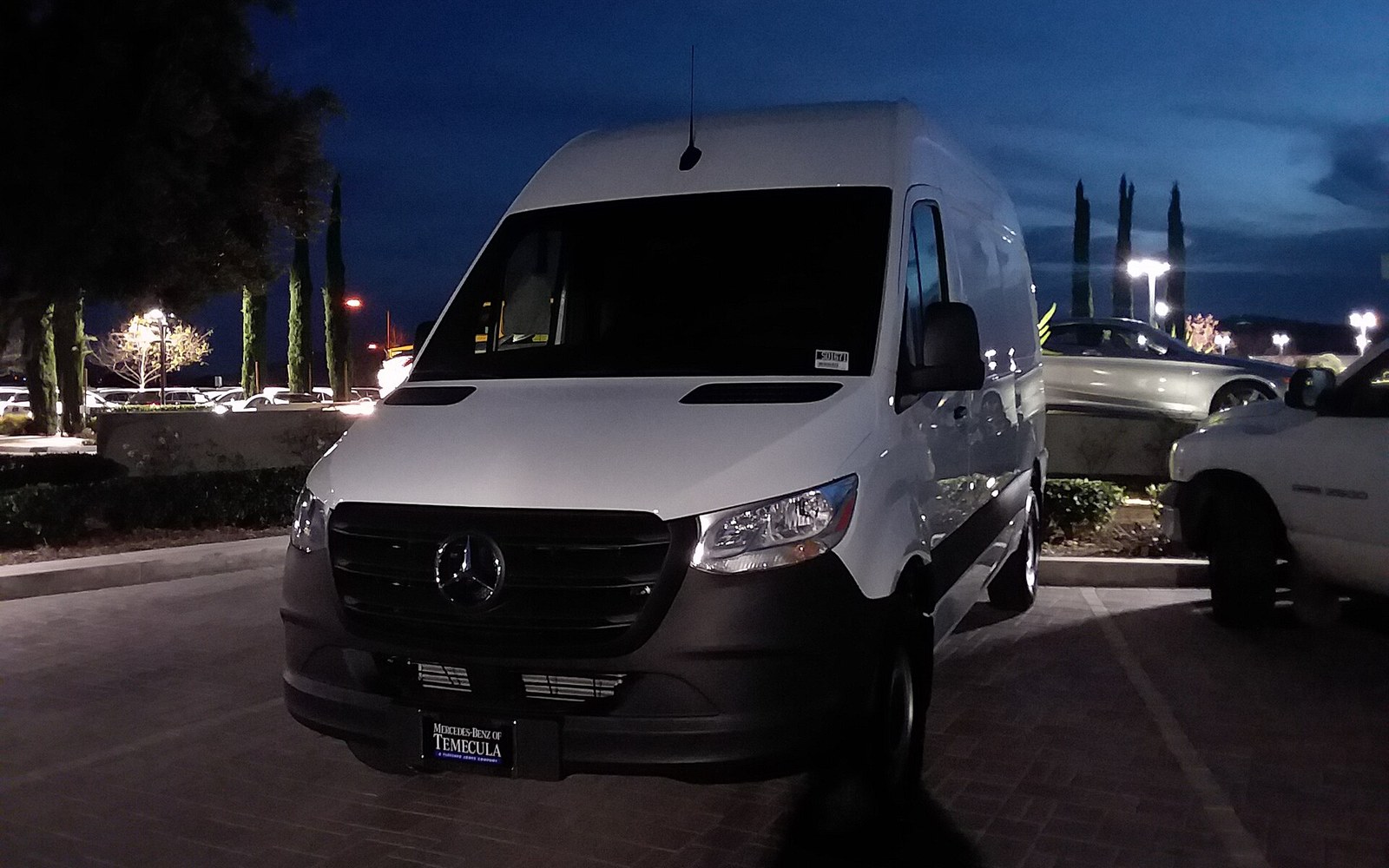

Operators working the Santa Barbara county corridors face terrain-specific complications. A van converted to accommodate a ramp at the rear or side loses several inches of ground clearance at the ramp deployment zone; on the unpaved access tracks common near Ballard Canyon or Sta. Rita Hills estate wineries, that clearance matters. Drivers must also manage vehicle GVWR carefully: a Sprinter 2500 high-roof configured with a lift, securement track, and supplemental HVAC can approach its rated capacity before passengers board, and exceeding the GVWR voids both the vehicle's certification and the carrier's commercial insurance coverage.
Certification, Inspection, and the CPUC's Role
California Highway Patrol commercial vehicle inspections, required annually for TCP-permitted vehicles above 10 passengers or subject to BIT program enrollment, do not systematically verify lift or ramp function as an ADA matter — that is a federal enforcement question, not a CHP roadside priority. The CPUC's Transportation Enforcement Branch focuses its compliance reviews on permit status, insurance currency, and driver credentialing rather than accessibility hardware. This means accessible-conversion quality control falls primarily to the carrier's own procurement and maintenance practices, and to the liability exposure that comes with commercial livery insurance.
Carriers that actively market accessible charter services frequently obtain third-party inspection of their lift and securement systems from a certified driver-rehabilitation specialist or a Medicaid Non-Emergency Medical Transportation auditor — a practice that originates in the paratransit contracting world but transfers sensibly to private charter. Given that NHTSA's research on wheelchair-occupant crash protection has consistently identified securement failure as the dominant injury mechanism in accessible-vehicle incidents, independent inspection is less a regulatory nicety than a straightforward risk calculation.