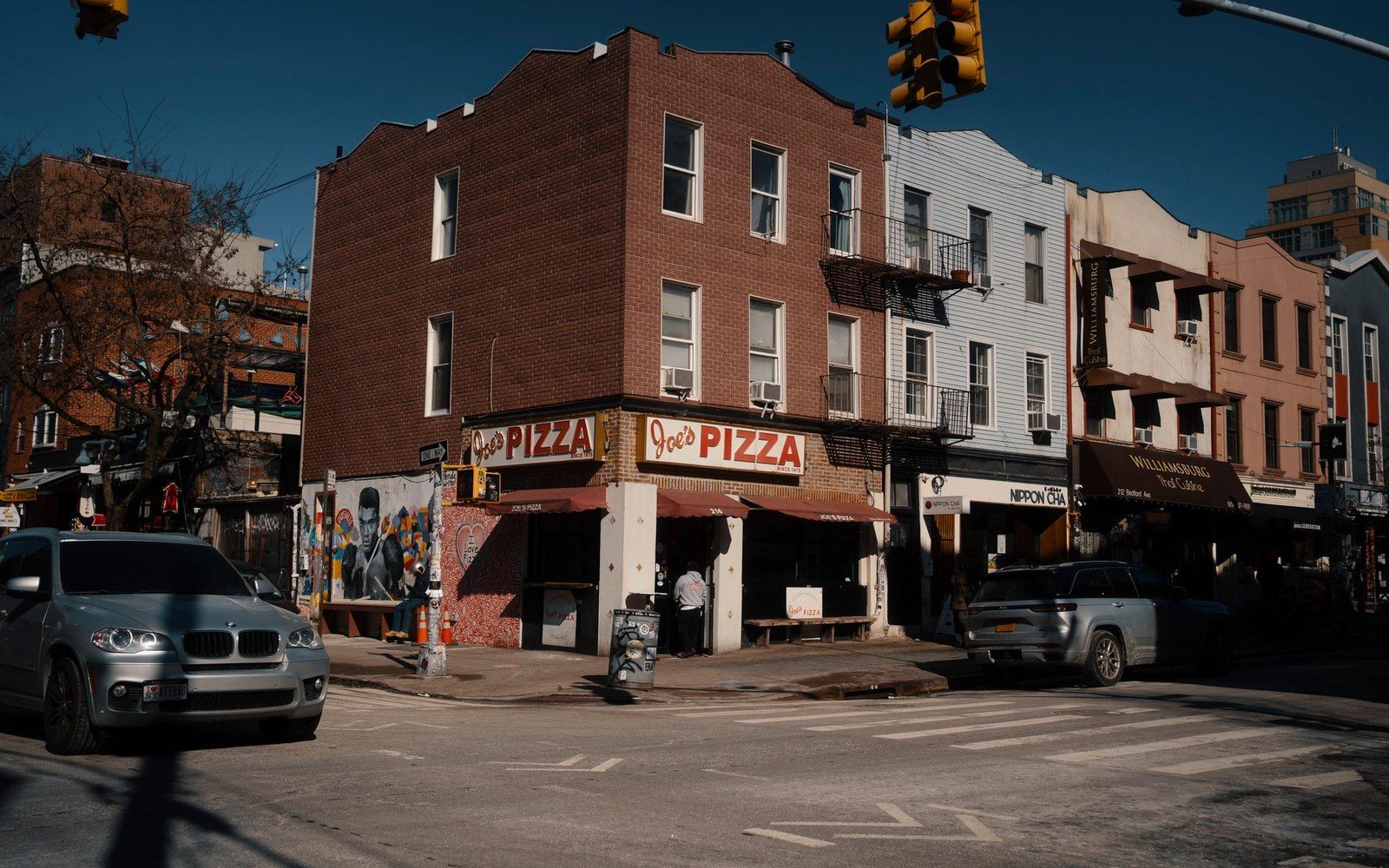
A former industrial district now drives some of the shortest — and most complicated — TCP work in the county
Santa Barbara's Funk Zone occupies a compact grid of former warehouses and light-industrial buildings between the 101 freeway and the waterfront, roughly bounded by Yanonali Street, State Street, and the rail corridor. Over the past decade, that grid has filled with urban tasting rooms, small producers, and wine bars collectively marketed as the Urban Wine Trail — a mapped circuit that concentrates demand for chauffeured transport within walking distance of itself, but rarely within practical walking distance of a legal drop-off point.
The city's street plan in this quarter was not designed for passenger vehicles lingering at the curb. Yanonali and Anacapa are narrow, with limited stopping zones; Helena Avenue, the spine of the tasting-room cluster, is a one-way industrial alley where a Mercedes-Benz Sprinter or Cadillac Escalade ESV occupies the lane rather than parking beside it. TCP carriers serving wine-trail groups must identify a legal stopping point, communicate it to the client before arrival, and often circle — a deadhead loop — while passengers complete a tasting. That circling is uncompensated time, and in a district where the next stop may be two blocks away, operators accumulate it quickly.
Turnover compounds the problem. Unlike a winery appointment in the Santa Ynez Valley, which anchors a group for ninety minutes or more, urban tasting rooms move guests in thirty-to-forty-five-minute intervals. A four-stop wine-trail booking requires four separate staging calculations in the same congested half-mile, with parking enforcement active on surrounding streets. Carriers familiar with the Funk Zone typically designate the Milpas Street corridor or the nearby Waterfront parking structure as holding areas between drops.
The California Public Utilities Commission's Transportation Enforcement Branch does not regulate where within a jurisdiction a TCP permit holder may stop, but the permit holder remains responsible for any traffic or municipal citation incurred during passenger service. Santa Barbara's city planning and zoning documents govern curb use and loading zones in the district; carriers operating there without advance route knowledge absorb both the compliance risk and the operational inefficiency.
For a TCP operator, the Funk Zone is not a prestige run — it is a logistics puzzle in a small box, repeated across a booking day at short intervals. The economics only work when vehicle size, route, and client expectation are aligned before the first departure.