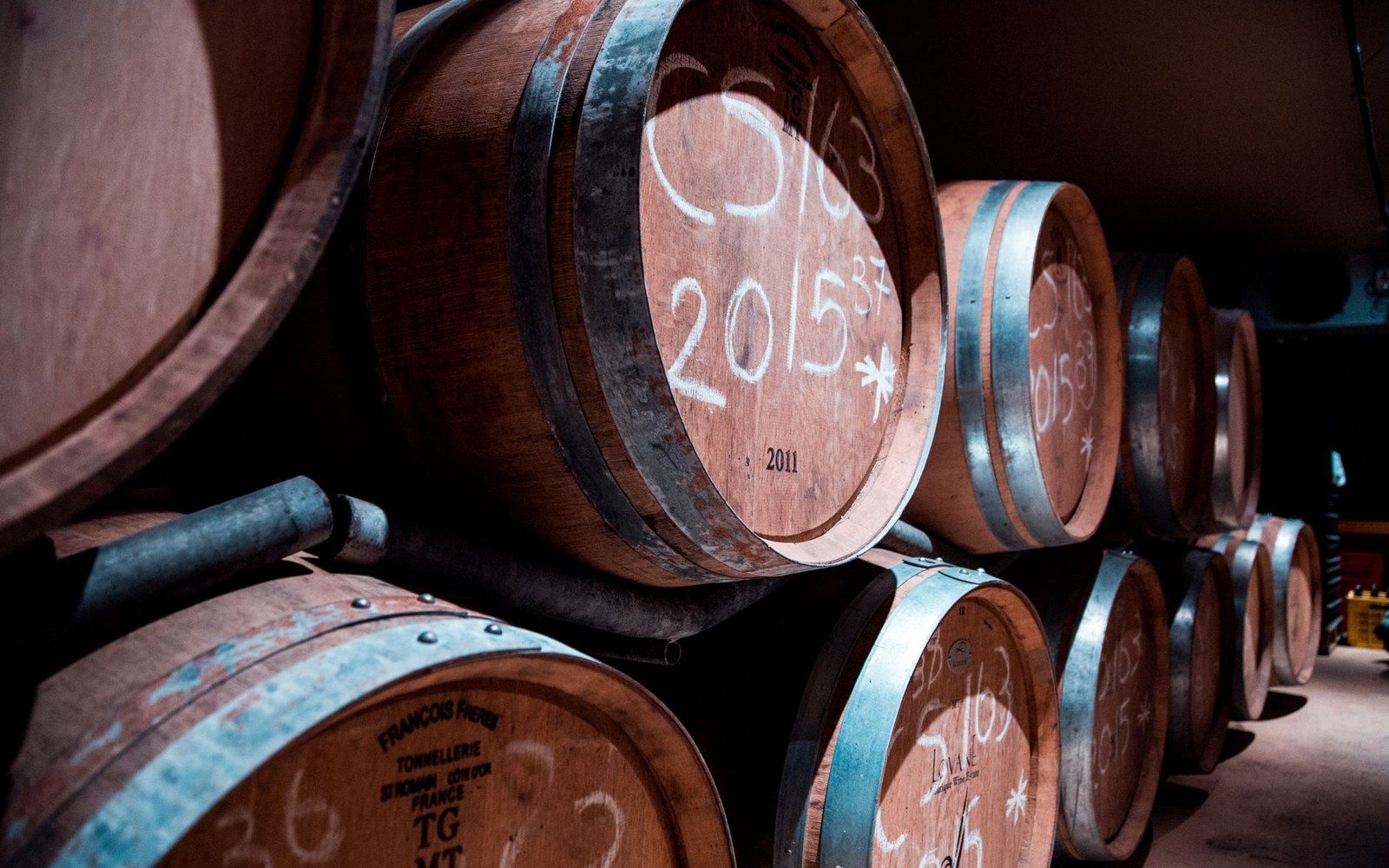
Concrete, Not Cobblestone
The Wine Ghetto — the name is the trade's own, worn with straightforward pride — occupies a light-industrial zone on the east side of Lompoc, roughly bounded by Industrial Way and Chestnut Avenue, a short drive from Highway 1 before it bends south toward the coast. The district hosts a concentration of bonded winery tasting rooms operating out of converted warehouse bays and cold-storage units: no vineyards in sight, no estate drives, no gravel approach roads flanked by oak trees. The wines — predominantly Pinot Noir and Chardonnay drawing on fruit from the Sta. Rita Hills AVA — are serious; the surroundings are industrial.
That distinction matters operationally. Where a valley estate typically offers a circular driveway or a designated coach area alongside agricultural outbuildings, the Wine Ghetto's street grid was platted for delivery trucks and forklift traffic, not passenger vehicles turning in formation. The City of Lompoc's general plan designates the surrounding parcels as light industrial, meaning on-street parking is governed by commercial-zone rules rather than the purpose-built visitor infrastructure one finds at larger estate properties. Curb lengths are adequate for a sedan or a Sprinter van but begin to constrain a full-size SUV convoy, and a standard stretch vehicle — already in structural decline across the California TCP fleet — has essentially no workable geometry here.

For a TCP carrier operating under a California Public Utilities Commission charter-party permit, the choreography requires pre-visit planning. Vehicles drop passengers at the curb, then deadhead to a nearby commercial parking area — several exist within two blocks — and return on call. The district is flat, the streets are wide by urban standards, and sight lines are unobstructed, which eases repositioning. The challenge is sequencing: multiple wineries sit in adjacent bays along the same industrial corridor, and charter groups frequently visit two or three stops in a single session, meaning a driver may cycle through drop-and-retrieve several times in under two hours.
The Santa Barbara Vintners lists more than a dozen member wineries operating within or immediately adjacent to the Lompoc Wine Ghetto footprint, making it one of the denser tasting-room clusters in the county by parcel count. That density is an asset for visitors — short walks between stops — and a logistical variable for operators, since it collapses dwell-time predictability. A driver who builds forty minutes of buffer at a valley estate must instead build a more dynamic pickup schedule across a half-dozen adjacent addresses, all on the same industrial block.